Documentation
Comprehensive guides and tutorials to help you get the most out of nuzur.
Integrations

Connecting to the nuzur MCP Server
Learn how to integrate Claude and other Model Context Protocol (MCP) clients with nuzur to query schemas in natural language.
Read more →
Deploying a project
Deploy your model to your own Linux server with one CLI command — generated app, self-hosted database, HTTPS, and schema applied automatically.
Read more →
Writing custom code
Add your own REST routes, gRPC overrides and background workers to the generated app — a user-owned zone that survives every regeneration.
Read more →
Running a local agent
Learn how to run the nuzur CLI local agent on your machine to securely query and manage local databases without exposing credentials.
Read more →
Go Code Gen
Generate a production-ready Go server with type-safe database queries, caching, Keycloak auth, and modular wiring.
Read more →
File storage
Register an S3 or Cloudflare R2 bucket for your team, point file fields at it, and get generated /upload and /sign endpoints in your deployed app.
Read more →Getting Started

Introduction to nuzur
Get an introduction to nuzur, a visual database model design and data management tool. Learn the basic concepts and how to get started today.
Read more →
Creating a new project
Follow our step-by-step guide to creating and setting up your first database modeling project on the nuzur web interface.
Read more →
Creating a new team
Learn how to set up collaborative workspaces, configure user roles, and manage database design projects with your team on nuzur.
Read more →Model editor
Model editor overview
Discover the main features and interface of the nuzur model editor. Learn to visually design models, tables, and relationships.
Read more →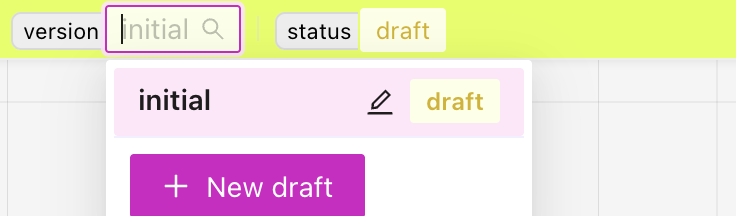
Managing model versions
Learn how to manage different schema versions, review historical changes, and keep your database design version-controlled.
Read more →
Managing entities
Learn how to create, edit, customize fields, and configure data validation constraints on your database entities in nuzur.
Read more →
Managing relationships
Understand how to establish and manage relationships (one-to-one, one-to-many, many-to-many) between database entities visually.
Read more →
Using the editor assistant
Leverage nuzur's editor assistant to import existing data structures, generate entities, and expedite database schema creation.
Read more →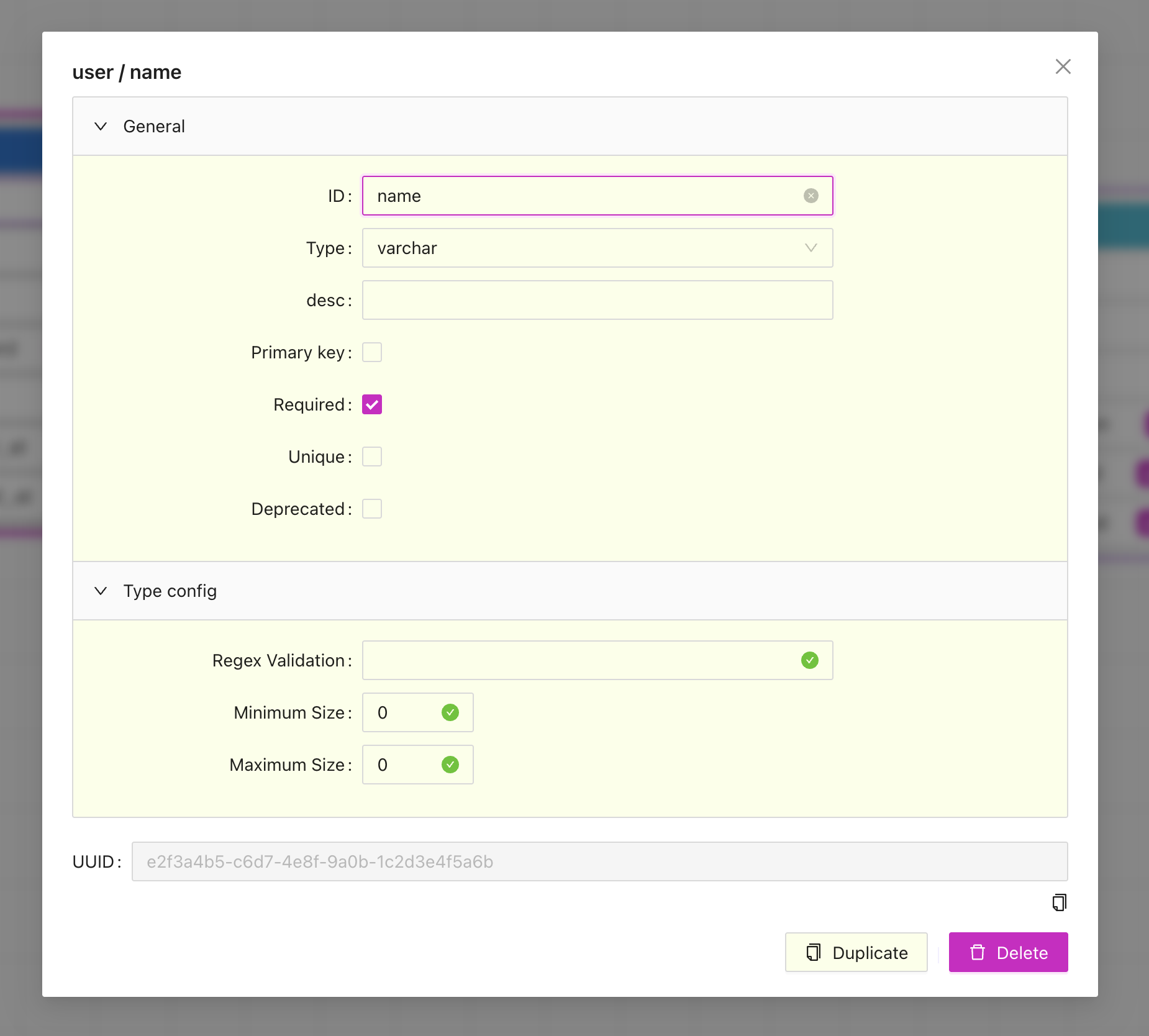
Field types
Browse every field type nuzur supports and the type-level validations each one offers, from UUID and decimal to file, image, and enum.
Read more →Editor Extensions
Editor extensions overview
Explore the extensions ecosystem of nuzur to automate migration scripts, code generation, protobuf files, and deployment configurations.
Read more →
Importing existing schemas
Learn how to easily import existing MySQL or PostgreSQL database schemas into nuzur to automatically generate a visual model.
Read more →
Pushing models to databases
Understand how to safely push visual database model changes directly to your live MySQL or PostgreSQL database.
Read more →
Generate SQL from models
Learn how to generate SQL migration scripts from your visual database models to keep schemas in sync.
Read more →
SQL Push (local)
Learn how to push model changes directly to local development databases on your machine using the nuzur CLI local agent.
Read more →
Protobuf Generator
Discover how to generate type-safe Protobuf definitions and compiler stubs from your visual database models in seconds.
Read more →Data Manager

Data Manager overview
Learn how to query, insert, update, and manage your application's data using the intuitive visual grid of the nuzur Data Manager.
Read more →
Connecting to databases
Follow our step-by-step guide to connect the nuzur Data Manager to remote or local MySQL and PostgreSQL databases.
Read more →
Managing data
Understand the data modification workflow in nuzur, including field validations, review logs, and data change requests.
Read more →
Using the Data Manager assistant
Leverage our built-in SQL AI assistant to help you write, refine, and optimize database queries directly in the Data Manager.
Read more →
Automations & webhooks
Fire signed webhooks when approved change requests are applied — set up automations, verify the signature, and monitor deliveries.
Read more →Collaboration

Collaboration overview
Explore the collaboration features of nuzur, including user roles, project permissions, and data model change request workflows.
Read more →
Sharing projects and teams
Learn how to share your database modeling projects and configure access permissions for team members and external stakeholders.
Read more →
Managing change requests
Understand the change request review process in nuzur to safely review, discuss, and approve database schema modifications.
Read more →