Supabase vs nuzur: Renting a Backend vs Owning One
If you've been shopping for a way to go from "I have a data model" to "I have a working backend," you've almost certainly run into Supabase. It's one of the best managed backend platforms out there, and for a lot of projects it's the right call.
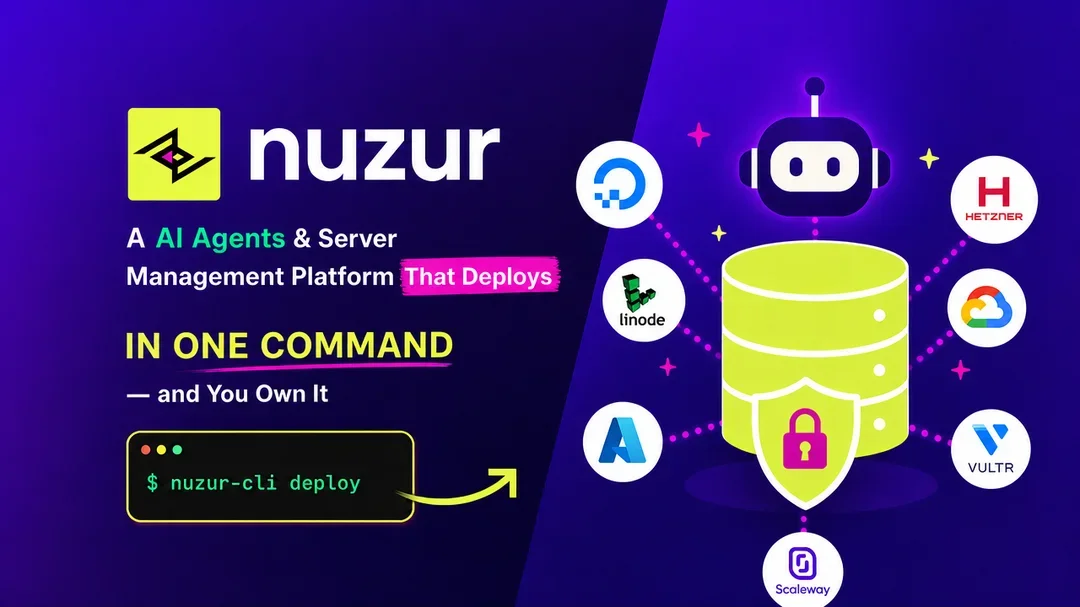
nuzur starts from the same place — your schema — but it ends somewhere different. Instead of hosting a backend for you, it generates the code for one and deploys it to a server you own — in a single command. You own it.
That single difference shapes everything else, so this isn't really a "which one is better" post. It's a "which one fits what you're building" post. I'll be straight about where Supabase is the stronger choice, because for a lot of people it genuinely is.
The short version
If you want to skip to the answer:
- Choose Supabase if you want a hosted backend running this afternoon — database, auth, storage, realtime, and functions, all managed for you. Great for MVPs, prototypes, weekend projects, and teams that don't want to run infrastructure.
- Choose nuzur if you're building a real service you intend to own — a Go backend on your own infrastructure, with no vendor in the critical path, and costs that stay flat as you scale.
They overlap at the entry point ("turn my schema into a backend") and diverge completely at the exit. One gives you a service to rent. The other gives you source code to own.
What Supabase actually is
Supabase is an open-source Firebase alternative built on PostgreSQL. You get a managed Postgres database with a stack of services bolted on: authentication, file storage, realtime subscriptions, edge functions, and auto-generated REST and GraphQL APIs over your tables.
The pitch is convenience, and it delivers on it. You sign up, define your tables, flip on Row Level Security, and you have a production-capable backend without touching a server. For getting an idea in front of users fast, very little beats it.
Pricing as of mid-2026 is tiered: a generous free tier (500 MB database, 50K monthly active users, but projects pause after a week of inactivity), a Pro plan at $25/month per project, a Team plan at $599/month with compliance features, and custom Enterprise pricing. The honest caveat — and the one Supabase users mention most — is that the headline prices are a base, with usage-based overages for egress, compute, and additional projects layered on top. The bill scales with your traffic.
That's not a knock. It's just what renting infrastructure looks like: low to start, variable as you grow.
What nuzur actually is
nuzur is a model-first tool. You design your data model visually, and from that single source of truth it generates the pieces of a backend:
- SQL migrations to version and evolve your schema
- REST and/or gRPC (Protobuf) APIs — pick REST, gRPC, or both — defined from your entities and relationships
- Go server scaffolding wired up and ready to extend
- Helm charts to deploy it on Kubernetes
- A one-command deploy (
nuzur-cli deploy) that provisions a server, builds the app, sets up a database, applies your schema, and serves the API over HTTPS - An MCP server so you (and your team, via Claude) can manage data through a reviewed change-request workflow
The key word is generated. nuzur produces the code — deterministically, so the same model always generates the same output — and then deploys it for you. That deploy step can even create the server (DigitalOcean or Hetzner), or target a Linux box you already own. The generation engine is open source (MIT licensed), and nuzur is free for personal use.
Here's the honest part: nuzur used to hand you code and stop there — "now go ship it." That's no longer true. nuzur-cli deploy takes you from model to a live URL in one command. What stays different from Supabase is ownership: the server, the code, and the database are all yours, running on your infrastructure with no platform in the critical path. You still operate that server over its lifetime — but standing it up is no longer the friction it once was.
The real difference: rent vs. own
Strip away the feature lists and the distinction is simple.
With Supabase, your backend lives on someone else's platform. That's a feature when you're moving fast — patches, scaling, and uptime are someone else's job. It becomes a consideration later: your auth, your data access patterns, and your costs are shaped by their platform, and migrating off it is real work.
With nuzur, the generated code is yours from day one. It runs on your infrastructure, in your language, with no platform in the critical path. There's no account that can pause your project, no egress meter, no per-project fee. The tradeoff is that the operational responsibility is also yours.
Neither is "better" in the abstract. Renting is the right move when speed and low overhead matter most. Owning is the right move when control, portability, and long-run cost matter most. Most projects start in the first camp and some graduate to the second — which is exactly why the comparison is worth thinking through early.
Side by side
| Supabase | nuzur | |
|---|---|---|
| Model | Managed backend you rent | Generated code you own |
| What you get | A running, hosted backend | Source code + a live deploy you own (migrations, REST/gRPC, Go server, Helm) |
| Database | PostgreSQL (managed) | MySQL & PostgreSQL (your instance) |
| Auth | Bundled in | Built-in JWT, or Keycloak |
| File storage | Bundled in | Generated /upload + /sign endpoints (S3 or Cloudflare R2) |
| Realtime | Bundled in | Not included |
| Hosting | Their platform | Your server — BYO, or nuzur provisions it |
| Time to first backend | Minutes | Minutes — one deploy command |
| Vendor lock-in | Meaningful — platform-shaped | Minimal — it's your code |
| Cost shape | Low base, scales with usage | Flat — you pay for your own infra |
| Best for | MVPs, prototypes, fast launches | MVP to production — a backend you own |
A few of these deserve a fair footnote. Supabase being a full backend-as-a-service is a genuine advantage — realtime out of the box is real value that nuzur doesn't try to replace. Auth and file uploads, though, nuzur now generates: built-in JWT/Keycloak, plus /upload and /sign endpoints backed by S3 or Cloudflare R2 (Supabase's storage still does more — CDN, image transforms, access policies). And "minimal lock-in" for nuzur comes with the asterisk that you're now responsible for the things Supabase was handling.
Where Supabase is the better choice
I'd reach for Supabase, not nuzur, when:
- You want realtime subscriptions, or Supabase's richer storage features. nuzur now generates built-in auth (JWT or Keycloak) and file uploads (
/upload+/signendpoints backed by S3 or Cloudflare R2), but realtime isn't offered, and Supabase's storage does more (CDN, image transforms, access policies) — that's still BaaS territory. - You don't want to run infrastructure at all. nuzur's deploy is one command, but the server it stands up is still yours to operate. If you'd rather never own a server, that's a clear signal.
- Your team is frontend-heavy. Supabase's client libraries and instant APIs let you build without a backend engineer.
If most of those describe you, stop reading and go use Supabase. It's good software.
Where nuzur is the better choice
nuzur pulls ahead when:
- You're building a real Go service. You want idiomatic Go on Kubernetes, not glue logic around someone else's runtime.
- You can't accept a vendor in the critical path. Compliance, data residency, or just principle — the code needs to be yours.
- You're optimizing for cost at scale. A flat infrastructure bill beats a usage-metered one once your traffic is non-trivial.
- Your schema is the source of truth. You want migrations, an API contract, and server scaffolding to stay consistent because they're all generated from one model — not hand-synced across tools.
The throughline: nuzur is for people who've decided to own their backend and want the boilerplate of doing so generated for them, deterministically, instead of hand-written.
The cost question, over time
This is where the rent-vs-own framing gets concrete. Supabase's cost starts near zero and climbs with usage — egress, compute, monthly active users, extra projects. For a small app that curve stays cheap for a long time. For a successful one, it keeps climbing.
Owning your backend inverts the shape. There's some upfront effort (you operate the server over time), but the cost is your own infrastructure, which stays roughly flat regardless of how much traffic flows through it. Somewhere out at scale, the two curves cross.
nuzur's bet is that code generation plus a one-command deploy moves that crossover point earlier. If owning a backend means hand-writing migrations, an API layer, and deployment config, the upfront cost is high enough that renting wins for longer. When that boilerplate is generated and deployed for you, ownership gets cheaper to start, and the break-even arrives sooner.
That's the case for nuzur in one sentence: it lowers the cost of owning, which is the only thing that made renting the default in the first place.
Can you use both?
Yes, and plenty of people should. Prototype on Supabase to find out whether the idea has legs. If it does and you decide you want to own the backend, nuzur is a path to generate the Go service, its REST/gRPC API, and deployment artifacts from your model. They're not mutually exclusive across the life of a project — they fit different stages of it.
FAQ
Is nuzur a Supabase alternative? For the right need, yes — we go deeper on this in nuzur as a Supabase alternative. Short version: Supabase hosts a backend for you, while nuzur generates the code and deploys it to a server you own, in one command. If "alternative" means "another hosted BaaS," no; if it means "another way to get from schema to a live backend you own," yes.
Does nuzur include authentication like Supabase?
Yes — nuzur generates built-in JWT auth, or wires up Keycloak (OpenID) if you prefer. File uploads too: enable file storage and the generated backend exposes /upload and /sign endpoints backed by S3 or Cloudflare R2. Where Supabase still pulls ahead is realtime (which nuzur doesn't offer) and its richer storage layer (CDN, image transforms, access policies).
Is nuzur cheaper than Supabase? It depends on scale. Supabase is cheaper to start and meters with usage. nuzur has no platform fee — you pay for your own infrastructure, which tends to be flatter and cheaper at higher traffic, but costs you the operational effort.
Does nuzur support PostgreSQL? Yes — both MySQL and PostgreSQL. Supabase is PostgreSQL only.
Do I get locked into nuzur the way I might with a hosted platform? Not in the same way. nuzur generates code you own, and the generation engine is open source. The output runs without nuzur in the critical path.
Getting started
nuzur is free for personal use. If you want to see what generating a backend from a model feels like — migrations, a REST and/or gRPC API, Go server scaffolding, and Helm charts from one visual schema — you can try it without signing up first.
And if you've been on Supabase and you're starting to feel the pull toward owning your stack, that's exactly the moment nuzur was built for. Renting got you here fast. Owning is what keeps it yours.